
An education built around the child.
Montessori is more than a teaching method — it is a deeply researched understanding of how children learn when they are trusted to follow their own curiosity. Here is what that looks like in practice.
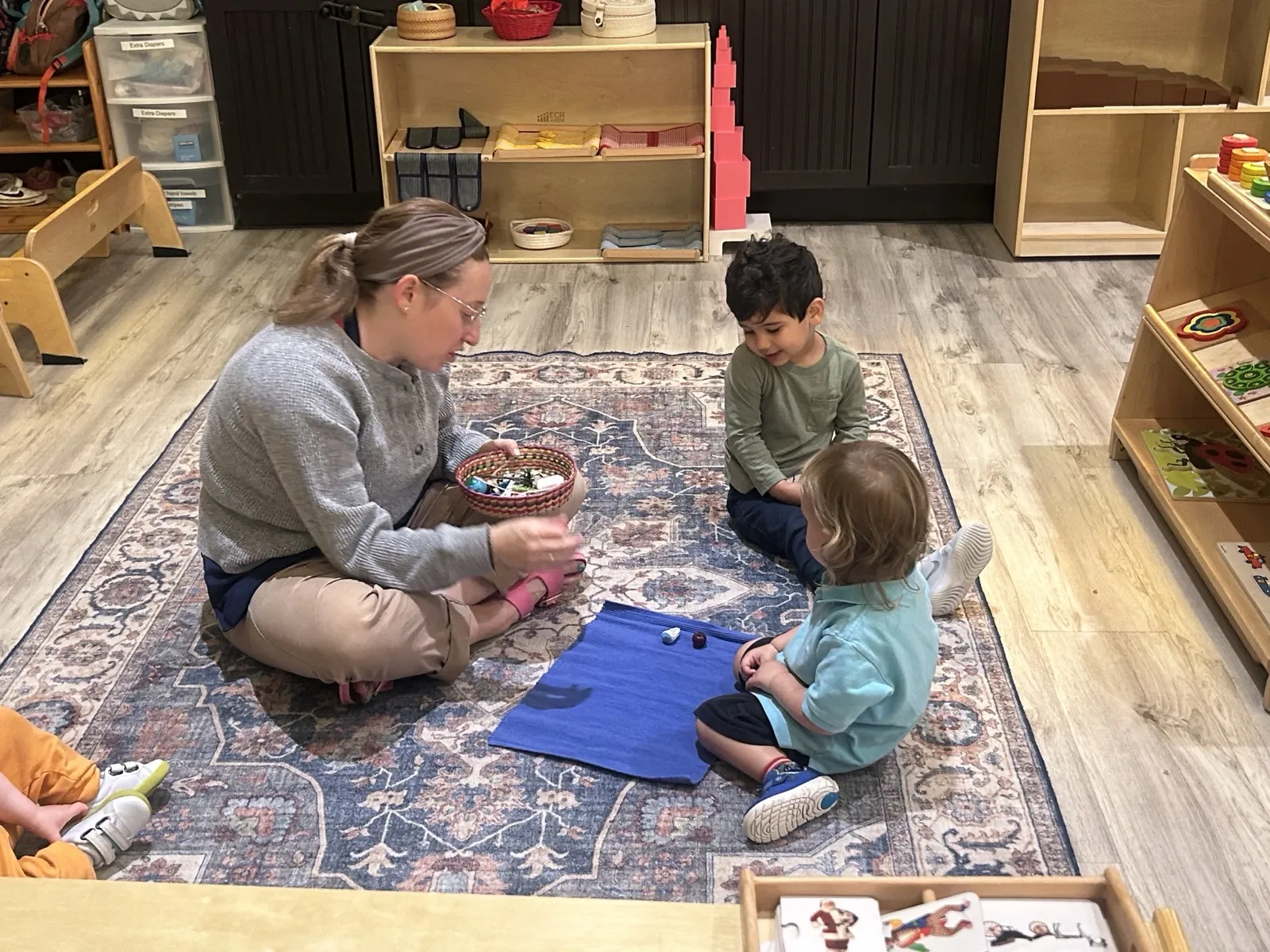
Children learn to do things for themselves — pour their own water, dress themselves, choose their own work. Independence builds confidence.
An uninterrupted three-hour work cycle protects deep focus, the foundation of all later learning.
We follow the child's pace, interests, and developmental stage — never the schedule of a curriculum or the noise of a group.
Mixed-age classrooms let younger children learn from older ones, and older children consolidate knowledge by mentoring.
What a Montessori day actually looks like.
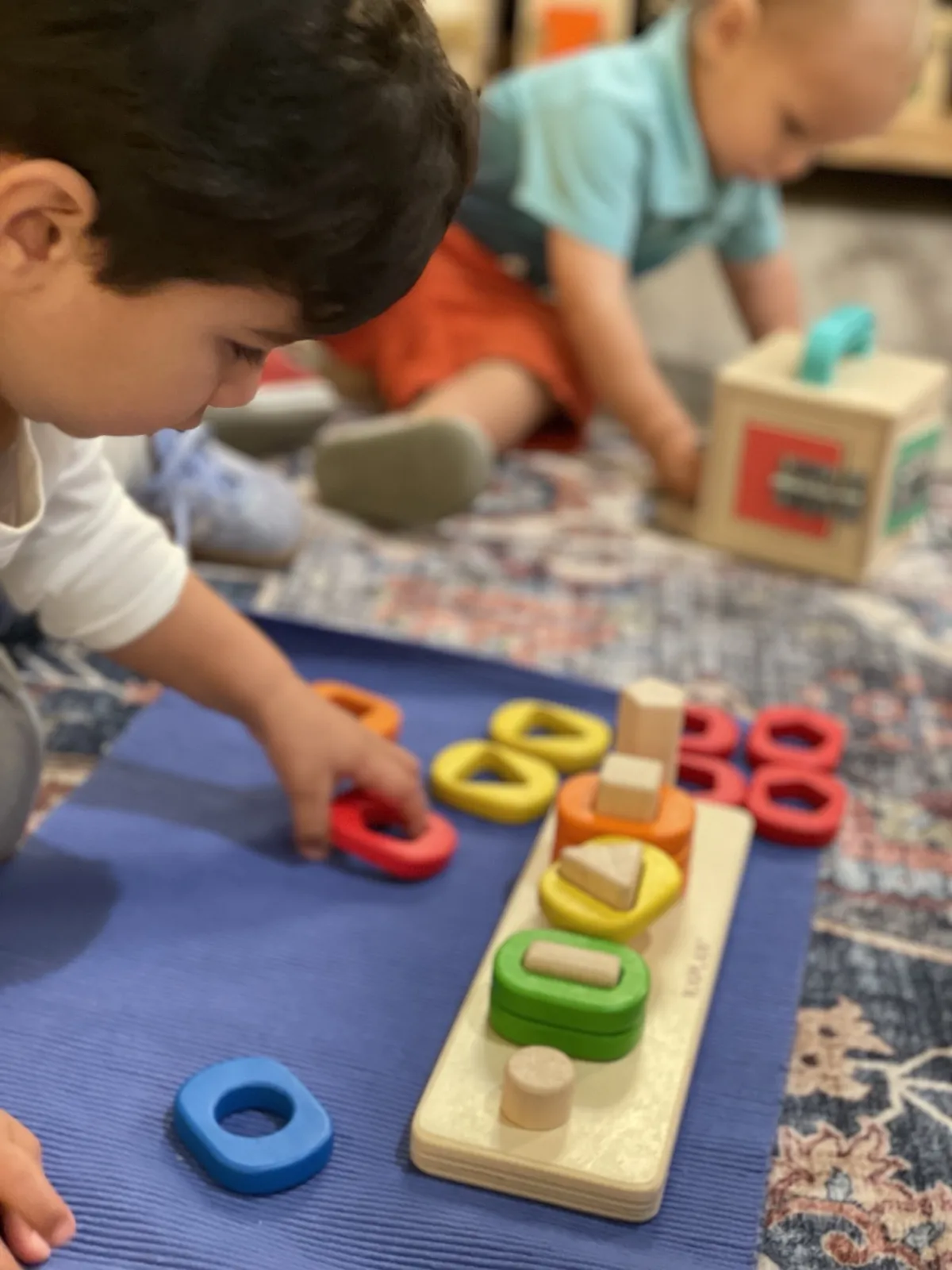
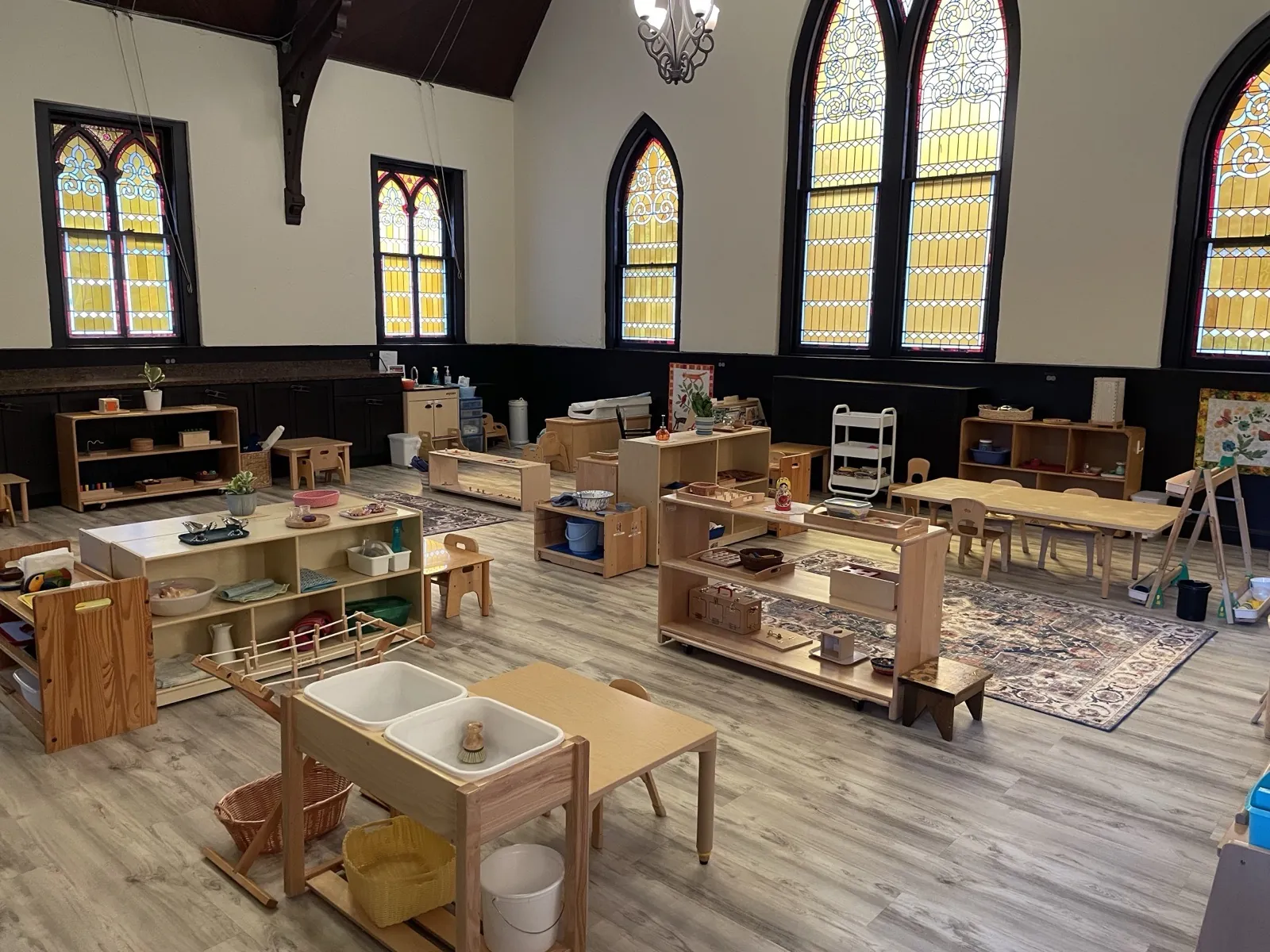
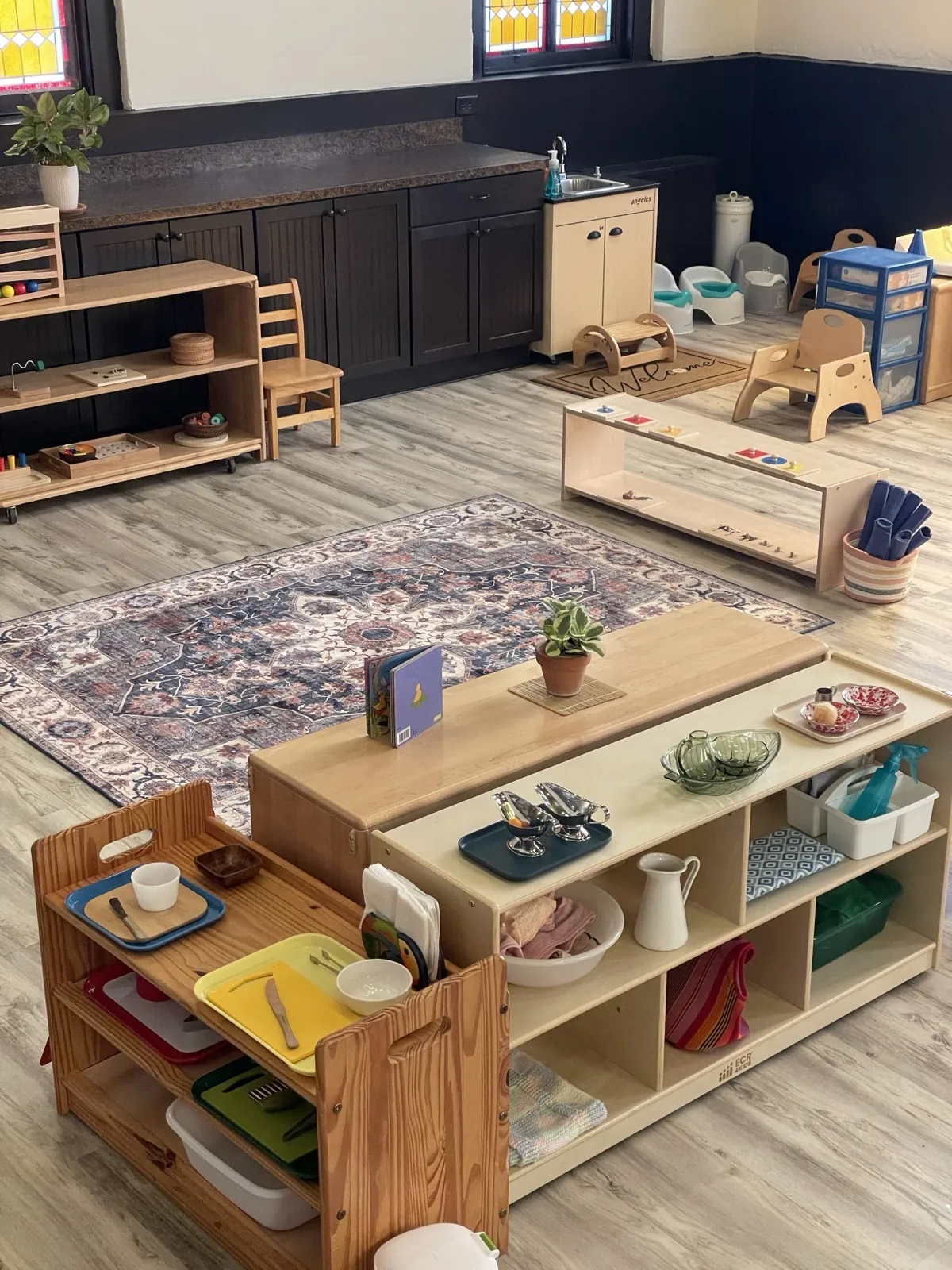
A Montessori classroom is a prepared environment — every shelf, every tray, every material is chosen with intention. Children move freely, choose their own work, and stay with each task as long as it holds their interest.
There are no whole-group lessons in the traditional sense. Guides observe each child, present a new material when readiness shows, and step back to let the child master it through repetition.
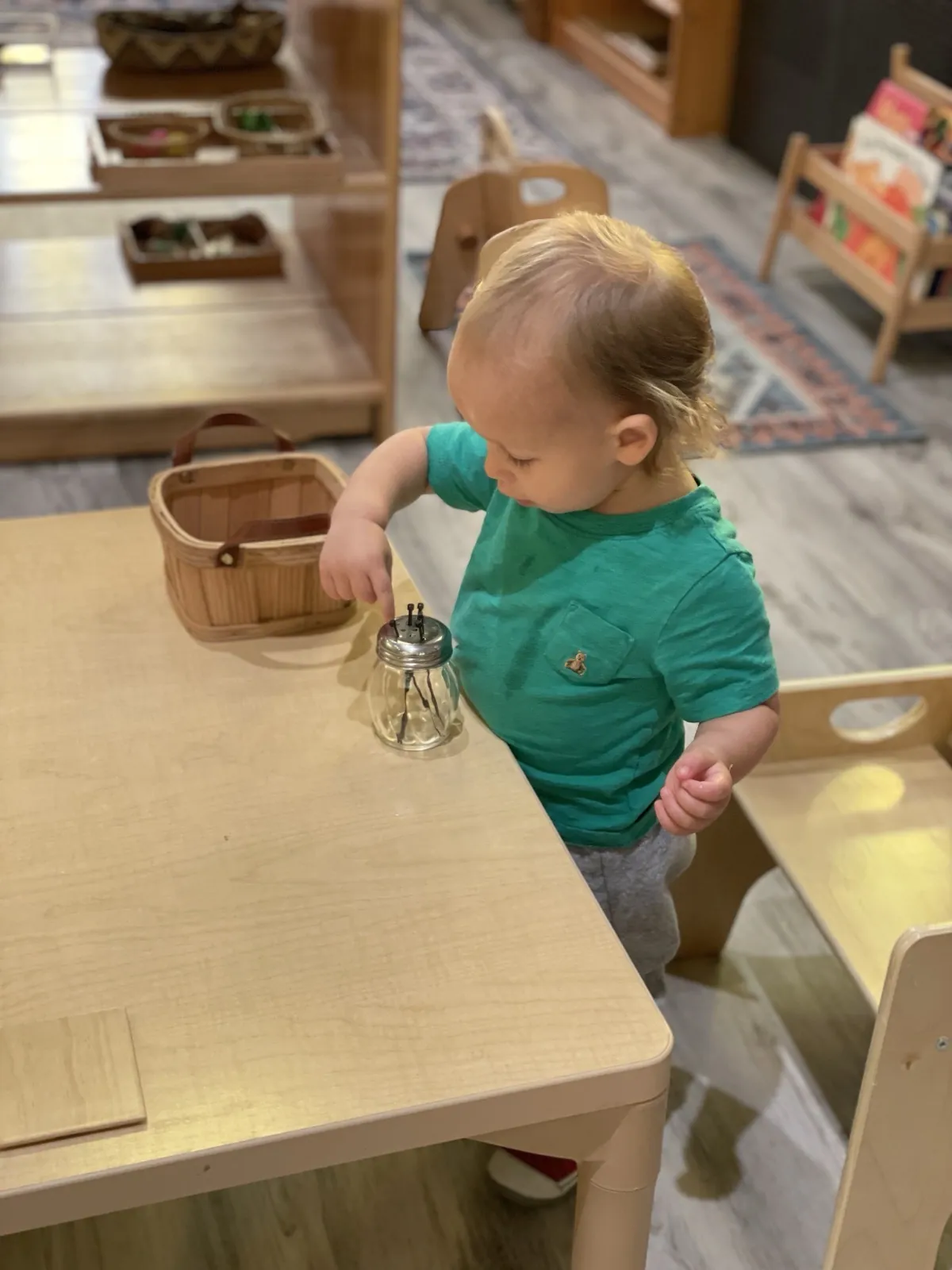
What looks like simple play — pouring water, polishing wood, matching shapes — is the careful construction of attention, coordination, language, and order. The ordinary becomes extraordinary.
"Free the child's potential, and you will transform him into the world."
— Dr. Maria Montessori
The doctor who listened to children.
Maria Montessori (1870–1952) was the first woman to graduate from medical school in Italy. Working with children in poverty in Rome, she noticed something the prevailing science missed: when children were given simple, beautiful materials and the freedom to choose their work, they concentrated for hours and learned with extraordinary depth.
Her observations grew into a full method, refined across decades and tested with children in dozens of countries. Today AMI (Association Montessori Internationale) — the organization Dr. Montessori herself founded in 1929 — continues to certify guides in the original method.
What we do at Starling is anchored to those observations. The materials, the rhythm of the day, and the role of the guide all trace back to a doctor who took children seriously when no one else did.
Common questions about the method.
How it works
Is Montessori only for certain kinds of children? +
No. Montessori is designed around the universal way children learn — through movement, hands-on work, and self-directed exploration. Children of every temperament and learning profile thrive in a well-prepared environment.
Will my child learn to read and write? +
Yes. Montessori children typically begin reading and writing during the Primary years (ages 3–6), often earlier than peers in conventional preschools. The method approaches literacy through movement and sound — sandpaper letters, the moveable alphabet, phonetic decoding — and most children arrive at reading on their own.
Why no traditional lessons or grades? +
Children in a Montessori classroom progress at their own pace. A guide observes each child, gives an individual lesson when readiness shows, and steps back. The work itself reveals whether mastery has been reached — there is no need for grades.
Concerns from parents
Is it too unstructured? +
It looks unstructured but is highly structured. Each material has a precise purpose, a defined sequence, and a built-in self-check. The structure lives in the environment, not in the schedule.
How will my child do in conventional school later? +
Research consistently shows Montessori children transition well — they tend to be self-directed, comfortable with focus, and curious about academic subjects. The internal motivation built in the early years carries forward.
Is mixed-age classrooms a problem for older children? +
On the contrary. Older children consolidate their learning by mentoring younger ones, and the social mix mirrors real life far better than a classroom of children all the same age.
The best way to understand Montessori is to see it.
Tour the classroom, watch children at work, and ask anything you'd like.